

Different Speed Bumps for Different Needs
When it comes to reducing vehicle speed, improving site safety, and controlling traffic flow, speed bumps are often one of the first solutions considered. But speed bumps vary significantly in design and material. The choice between traditional asphalt humps and modern rubber speed bumps can significantly impact installation time, cost, environmental footprint, and long-term performance.
For facilities managers, developers, and local authorities looking to make informed decisions, the material used is a strategic choice. Below, we explain the differences between rubber speed bumps and traditional asphalt humps to help you choose the best fit for your site. We’ll compare performance, sustainability, installation factors, and use cases, and we’ll also clear up confusion about different speed bump types, including the often-misunderstood speed cushion.
If you’re weighing up your options for speed control solutions, this guide will give you the clarity you need. Let’s start with a closer look at rubber speed bumps and what sets them apart from conventional options.
What Are Rubber Speed Bumps?
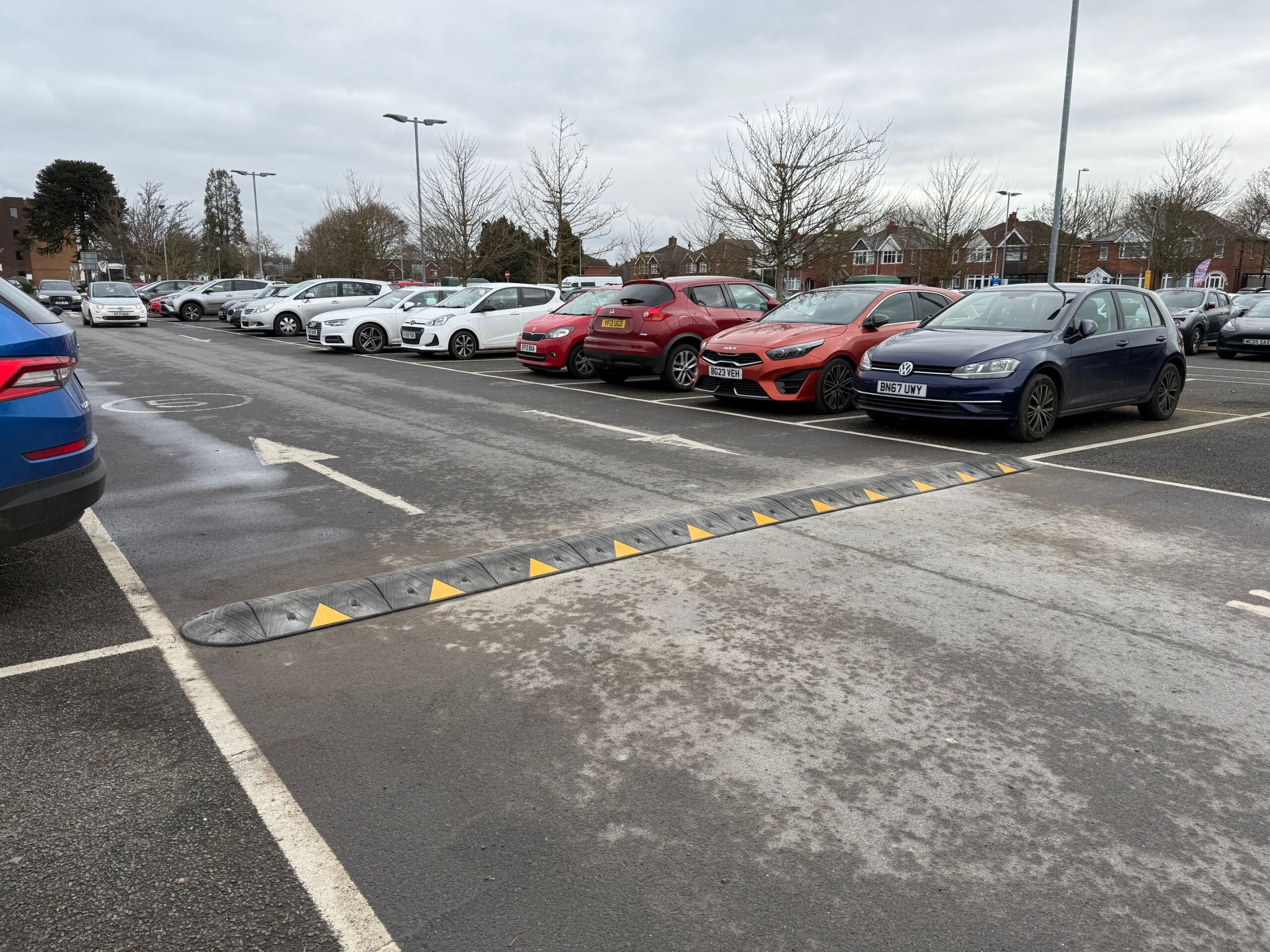
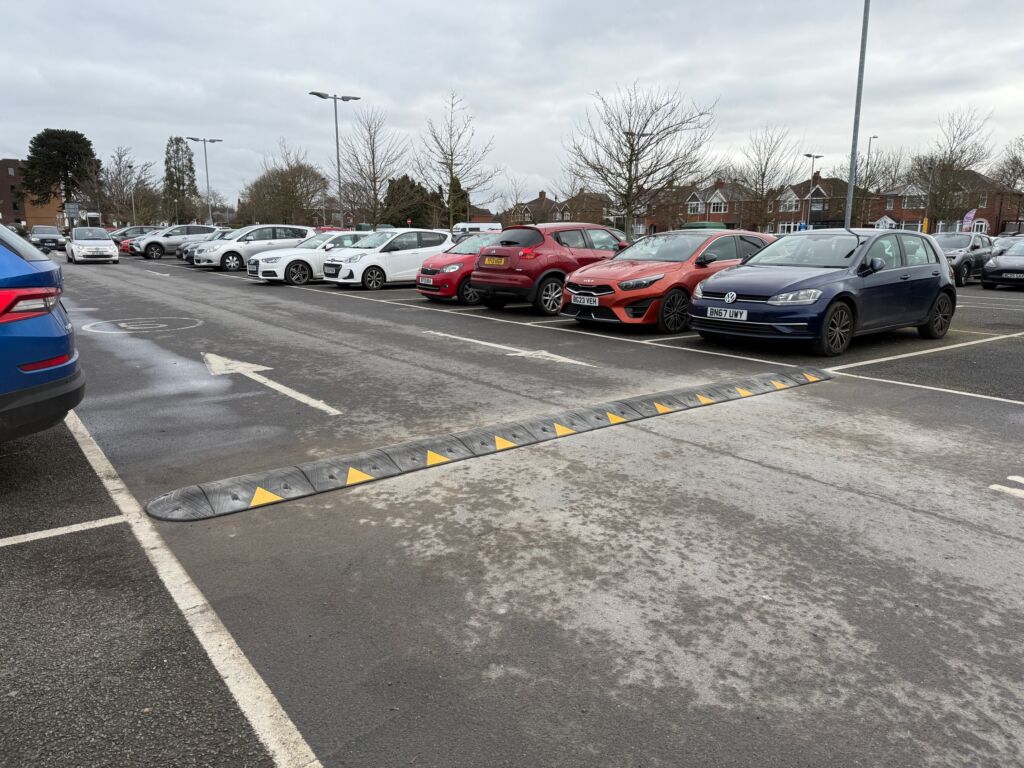
Rubber speed bumps, like the Rediweld Sitecop range, are pre-formed, modular traffic calming devices manufactured from recycled rubber. Unlike large one-piece rubber speed bumps found elsewhere or poured asphalt/concrete humps that are permanently integrated into the road surface, Rediweld’s modular rubber speed bumps are surface-mounted and can be mechanically fixed onto existing tarmac or concrete.
These bumps are designed to slow vehicles to safe speeds, typically around 5–10 mph, making them ideal for car parks, retail spaces, industrial access roads, and private developments. The use of modular components manufactured from recycled materials provides quick installation, easy maintenance, and consistent performance across varied settings.
Rediweld offers a wide range of sizes and formats, all made from recycled rubber in modular designs rather than large one-piece formats, including the Mini Sitecop Ramp for lower speed environments and the more robust SitecopPlus Ramp for sites requiring greater durability or a higher speed threshold.

Rubber vs. Asphalt: Key Differences at a Glance
The decision between rubber and asphalt often boils down to key logistical and operational factors. Below is a breakdown of the most important points of comparison between Sitecop modular rubber speed bumps made from recycled truck tyres and traditional asphalt or concrete speed humps.
Installation Time
Rediweld’s modular rubber bumps come in pre-formed sections and are installed using anchor bolts, typically within a few hours. Asphalt humps on the other hand require excavation, forming, pouring, curing, and often painting, which can disrupt site access for a full day or more.
Cost Over Time
Although asphalt may seem cheaper upfront in terms of raw materials, the labour costs and disruption associated with its installation can be significant. Rediweld’s modular rubber options often present a lower total cost of ownership, there’s minimal downtime, no need for repainting, and section replacements are quick and affordable.
Sustainability
Rubber speed bumps such as Rediweld’s Sitecop models are made from recycled rubber in modular formats, helping reduce environmental waste. Unlike large one-piece rubber products, Rediweld’s modular approach maximizes material efficiency. Asphalt production is energy-intensive, often involving significant emissions during production and installation.
Maintenance
Traditional asphalt humps are difficult to maintain, patching can be unsightly and full resurfacing may be required. With Rediweld’s modular rubber designs made from recycled rubber, individual segments can be replaced if damaged, making ongoing maintenance faster and cheaper than both asphalt and large one-piece rubber alternatives.
Flexibility
Once an asphalt hump is installed, it’s a permanent fixture. Large one-piece rubber speed bumps are similarly difficult to reconfigure. However, thanks to their modular bolt-down design, Rediweld’s rubber speed bumps can be removed, reconfigured, or relocated, making them a flexible option for temporary installations and changing site layouts.
Visual Clarity
Rediweld’s modular rubber bumps come with high-contrast markings integrated into their moulded surface. Asphalt or concrete versions require line painting, which can fade and need regular renewal to remain effective.
Now you can see how these differences might influence your choice, especially when balancing cost, sustainability, and long-term site planning.
Where Modular Rubber Speed Bumps Work Best
Rediweld’s modular rubber speed bumps made from recycled rubber are not a one-size-fits-all solution, but they are the perfect fit for many modern use cases, particularly where flexibility, speed of installation, and cost-efficiency are critical.
One of the primary environments where Rediweld’s modular rubber speed bumps excel is in private car parks, for retail centres, housing developments, educational institutions, and hospitals. These sites typically require reliable speed controls that keep daily operations running smoothly, and as Rediweld’s modular rubber speed bumps can be installed with minimal downtime, they’re ideal for these high-traffic, time-sensitive environments.
They also shine in temporary setups, such as event sites, construction zones, and short-term traffic diversion schemes. Their modular nature (not large one-piece designs) makes them easy to deploy and remove as needed.
In retrofit projects, where the existing road surface isn’t being rebuilt, Rediweld’s modular rubber speed bumps can be added without disturbing the infrastructure. Asphalt or concrete solutions would require resurfacing or ground preparation, which isn’t always feasible.
Finally, modular rubber speed bumps are ideal for low-speed access roads, especially those limited to 20 mph or less. They deliver consistent speed control without harsh vehicle impact, especially when using formats like the MiniSitecop for more delicate control.
The full Sitecop range from Rediweld is designed to offer flexibility, suitable for both permanent and temporary use. All products are made from recycled rubber in modular formats. This dual benefit makes it a go-to choice for specifiers seeking adaptable traffic management systems.
Speed Cushion vs. Speed Bump: What's the Difference?
A frequent source of confusion for decision-makers is the difference between a speed cushion and a speed bump. Although both are forms of traffic calming, their applications and structural designs differ significantly.
A speed bump, like Rediweld’s Sitecop, extends across the full width of the road or lane, creating a noticeable vertical deflection that slows all vehicles, regardless of type. These modular units, made from recycled truck tyres, are best where traffic speeds must be kept very low.
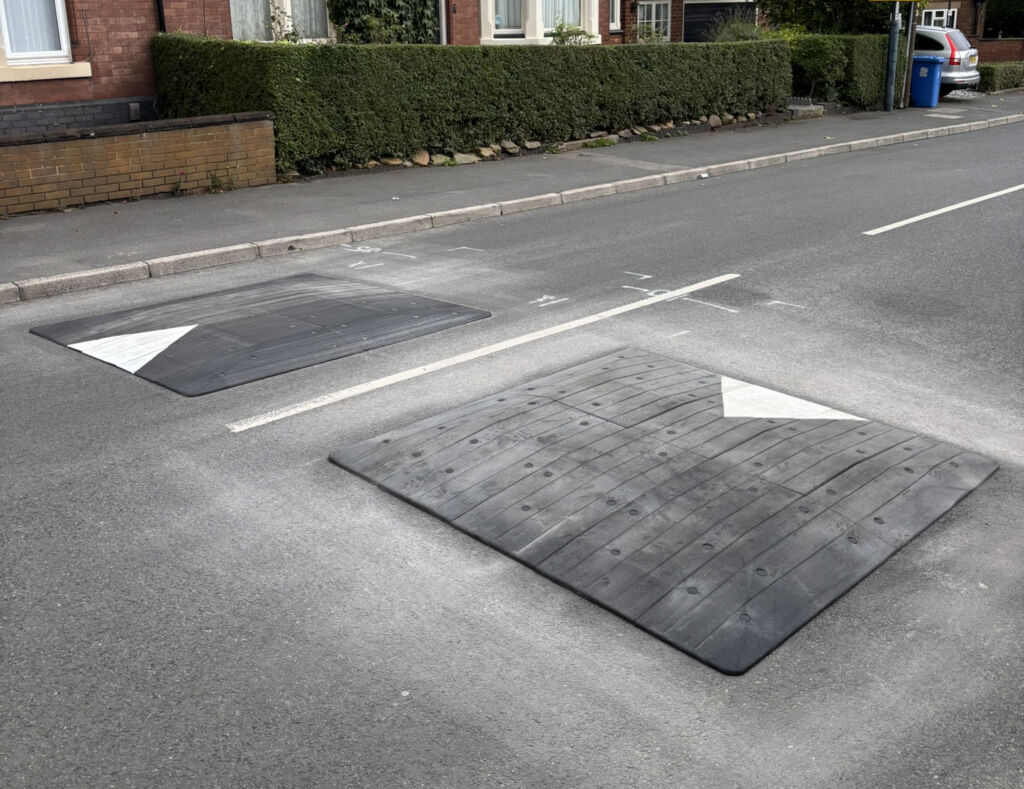
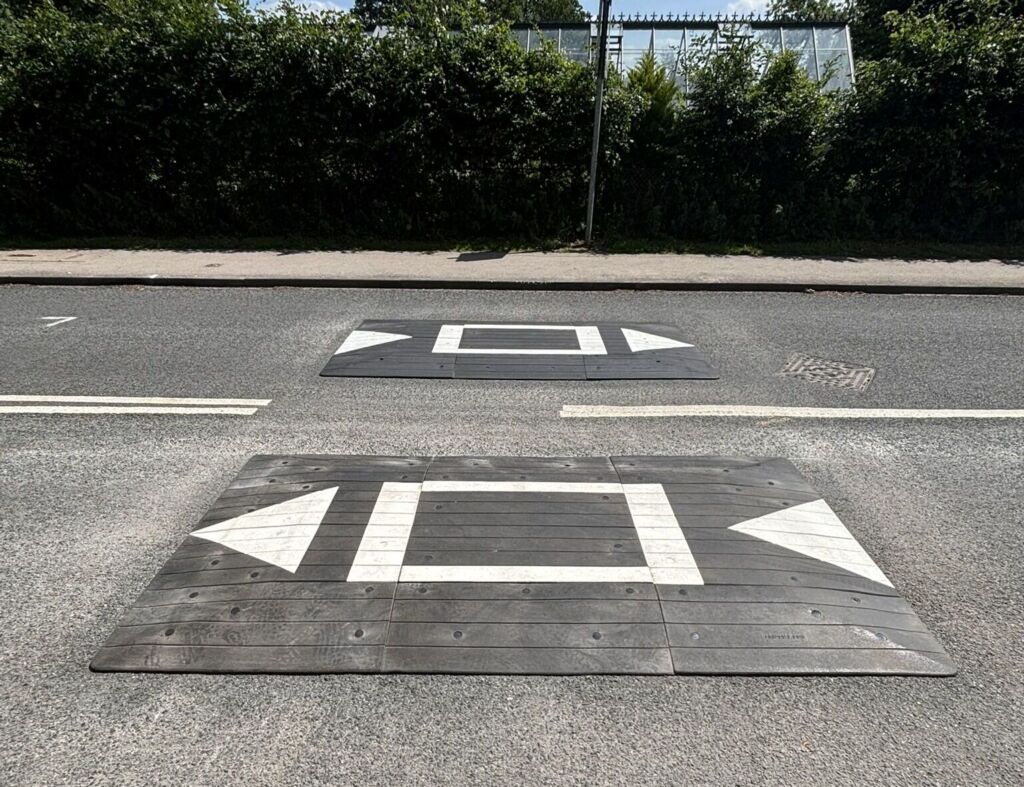
A speed cushion, on the other hand, is a more refined approach to public road calming. These are raised rectangular platforms placed centrally in each lane, leaving space on either side for larger vehicles (like buses or emergency services) to straddle the cushion. This makes them more suitable for urban areas where traffic calming is needed without impeding vital services.
Rediweld’s Traficop® range of modular speed cushions, made from recycled rubber, provides durable, DfT-compliant solutions for councils and local authorities, aligning with standards outlined in the LTN 1/07 guidance.
For public road applications, Rediweld also offers the Sinusoidal Ramp, a modular traffic calming solution with a gentler profile than traditional speed cushions. Made from recycled materials and surface-mounted without excavation, it’s particularly effective for areas with cyclists, emergency vehicles, and cargo bikes.
Understanding this difference is crucial. If your site experiences a mix of vehicle types, especially in public service areas, cushions or sinusoidal ramps may be the better fit. But for private roads, security access points, or commercial sites with pedestrian concerns, Rediweld’s modular rubber speed bumps like Sitecop offer superior control and deterrence.
Legal and Safety Considerations
Speed control devices, while effective, must comply with legal and safety standards, particularly if installed on public roads. In the UK, the Highways (Road Humps) Regulations 1999 set out the requirements for public installations, including bump height (typically 25–100mm), lighting, warning signage, and proximity to pedestrian crossings or junctions.
These regulations do not apply to private land, which is where Rediweld’s modular rubber speed bumps are most often used. However, it is still best practice to follow similar guidelines for dimensions, markings, and signage to prioritise road user safety and accessibility.
Rediweld’s modular rubber speed bumps made from recycled rubber are particularly well-suited to private installations, where you are not bound by the full constraints of DfT legislation but still need to prioritise safety. Their modular design gives you the option to choose sizes and slopes appropriate for your site’s layout and user base.
Accessibility is another factor. Speed bumps must be carefully placed and marked to avoid becoming hazards for wheelchair users, cyclists, or pedestrians with visual impairments. Rubber designs, such as those from Rediweld, incorporate visual and tactile markers that improve awareness for all road users.
Proper signage is essential to warn drivers in advance. Using bright, reflective road signs in combination with the built-in reflectivity of Rediweld’s modular rubber products creates compliance with safety best practices.
For further reference, consult the UK Regulation, 1999/1025 and the Department for Transport’s comprehensive Traffic Calming Guidance.
The Right Speed Control Starts with the Right Material
Choosing between modular rubber speed bumps and traditional asphalt humps is more than a question of material, it’s about installation efficiency, ongoing maintenance, budget, sustainability, and suitability for your specific site.
Rediweld’s modular rubber speed bumps, like the Sitecop range, made from recycled rubber in flexible modular formats (not large one-piece designs), offer flexibility, visibility, and ease of maintenance. They’re a smart choice for car parks, commercial developments, temporary sites, or any location requiring reliable traffic control with minimal disruption.
Asphalt or concrete solutions may still be valid for large-scale public road schemes or when designing integrated traffic calming from the ground up. But for retrofit projects, private land, or facilities management teams seeking a fast, effective solution, Rediweld’s modular rubber ramps are increasingly the preferred option.
If you’re unsure which option is right for your site, Rediweld’s team can help you assess the appropriate product based on traffic volumes, speed zones, surface conditions, and long-term maintenance expectations. Explore the full Sitecop product range today or get in touch for a tailored recommendation.