

Why Knowing Your Options Matters
Across the UK, rising traffic volumes, community demands for safer streets, and national commitments to active travel have made traffic calming measures an increasingly important part of modern urban and rural planning.
For councils, urban planners, transport engineers, and contractors, choosing the right traffic calming solutions can have a measurable impact on public safety, mobility equity, and long-term infrastructure performance.
But what exactly do we mean by “traffic calming measures”? And how do you choose between the many types now available, especially with modular options becoming more accessible?
Drawing on over 30 years of experience manufacturing traffic management solutions across the UK, we’ll explain exactly what traffic calming measures mean, explore the key types, highlight their benefits, and show you how they work in practice. From planning permanent infrastructure to trialling short-term interventions, understanding your options is the first step to delivering safer, more sustainable streets.
For more on Rediweld’s modular solutions, visit the Rediweld Traffic Calming Overview.
What Are Traffic Calming Measures?
Traffic calming measures refer to physical modifications made to roads and streets with the specific goal of reducing vehicle speeds, discouraging cut-through traffic, and enhancing safety for pedestrians, cyclists, and vulnerable users. Unlike signage, enforcement, or education, which are important but non-physical strategies, traffic calming measures reshape how the road is perceived and used by drivers.
In UK guidance documents such as the Department for Transport’s LTN 1/07 Traffic Calming Guidance (PDF), the term encompasses both vertical and horizontal interventions, as well as surface treatments and shared space designs.
This distinction is important. While a “slow down” sign may influence driver behaviour momentarily, a well-placed raised table or chicane physically enforces the desired speed and space, which helps to achieve consistent compliance.
The term covers a wide spectrum, from basic speed humps to advanced hybrid designs, and is most effective when tailored to local conditions and usage patterns.
Vertical Deflection Measures
Among the most commonly used traffic calming methods are vertical deflection measures, solutions that create a raised feature on the roadway to physically slow down vehicles. These are particularly effective near pedestrian crossings, schools, residential streets, and anywhere speed reduction is critical.
Examples include:
- Speed cushions: Raised areas installed in pairs or groups, often with gaps for larger vehicles such as buses or emergency vehicles.
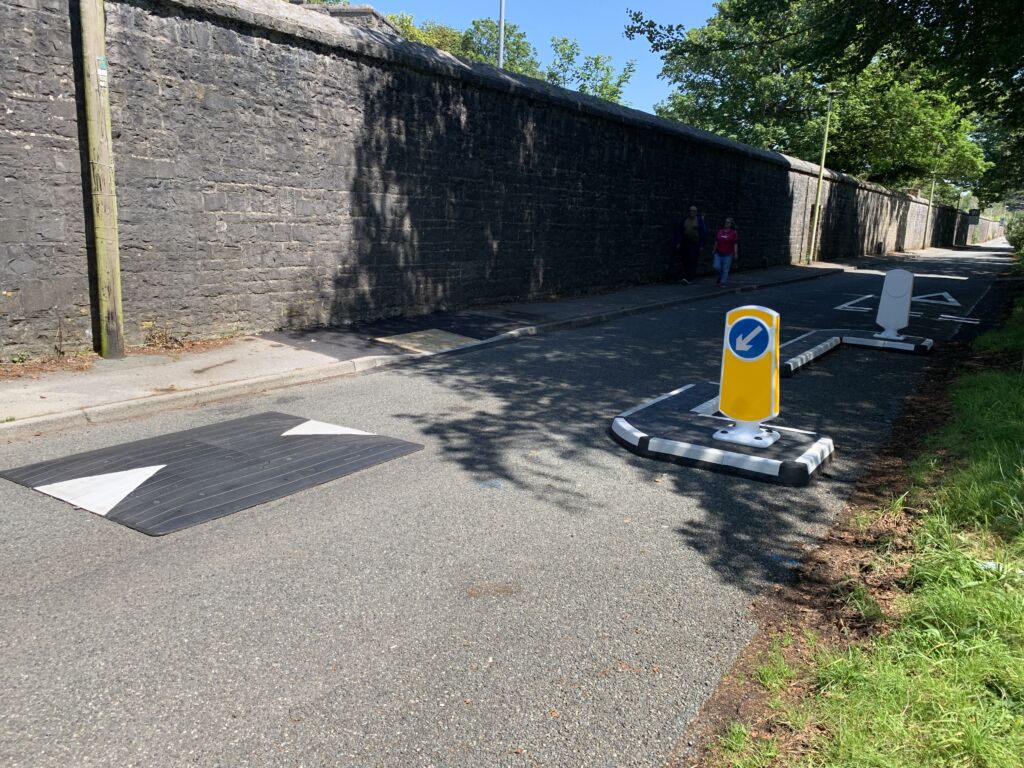
- Sinusoidal Ramp: A modular ramp with a gentler profile than traditional speed cushions, effective at slowing traffic while remaining comfortable for cyclists, cargo bikes, and emergency vehicles. Made from recycled materials and surface-mounted without excavation.
- Speed humps: Rounded mounds placed across the entire width of the carriageway.
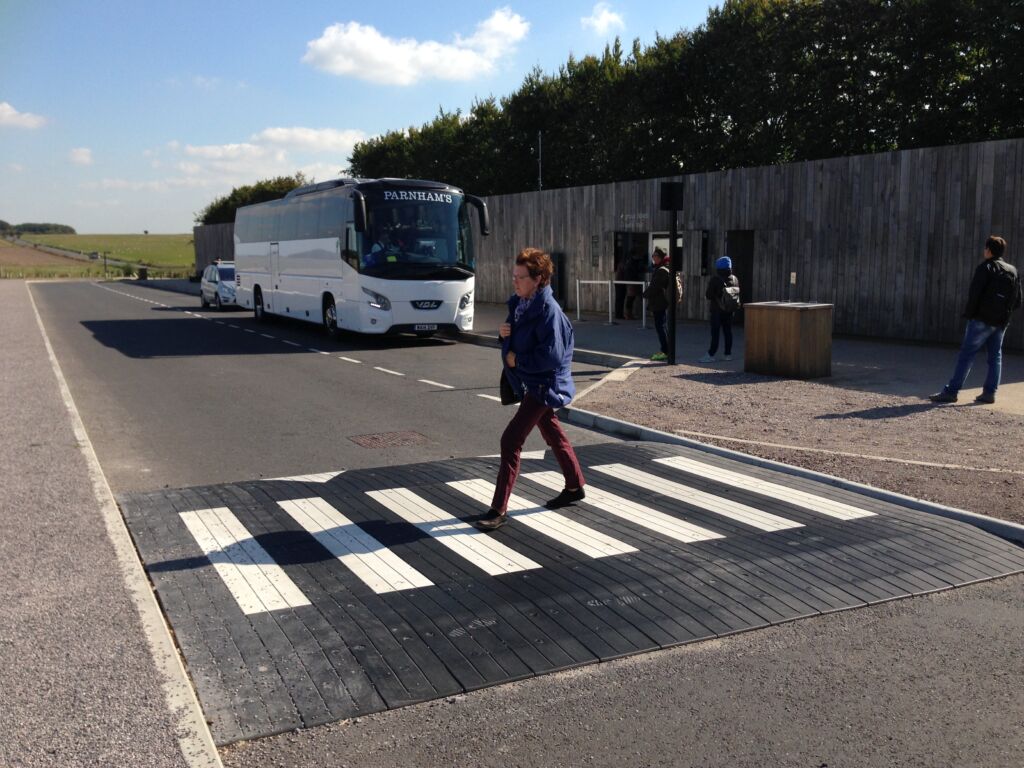
- Raised tables: Flat-topped elevation spanning pedestrian crossings or junctions, offering better accessibility and aesthetic appeal.
The effectiveness of these solutions is backed by years of real-world use and academic study. They are proven to reduce vehicle speeds and enhance compliance, particularly in urban neighbourhoods or near schools. They also serve as visual cues to remind drivers they’re entering a low-speed environment.
Traffic calming measures provided by Rediweld also offer excellent durability and flexibility, ideal for both permanent and temporary installations. Their design supports drainage, simplifies maintenance, and ensures compatibility with multiple road types.
Horizontal Deflection Measures
Where vertical solutions alter the height of the driving surface, horizontal deflection measures affect the lateral path of travel. These measures are often preferred in town centres or narrow residential areas where physical elevation may not be suitable.
Common examples include:
- Chicanes: Alternating curb extensions that require vehicles to slow down and steer around the bends.
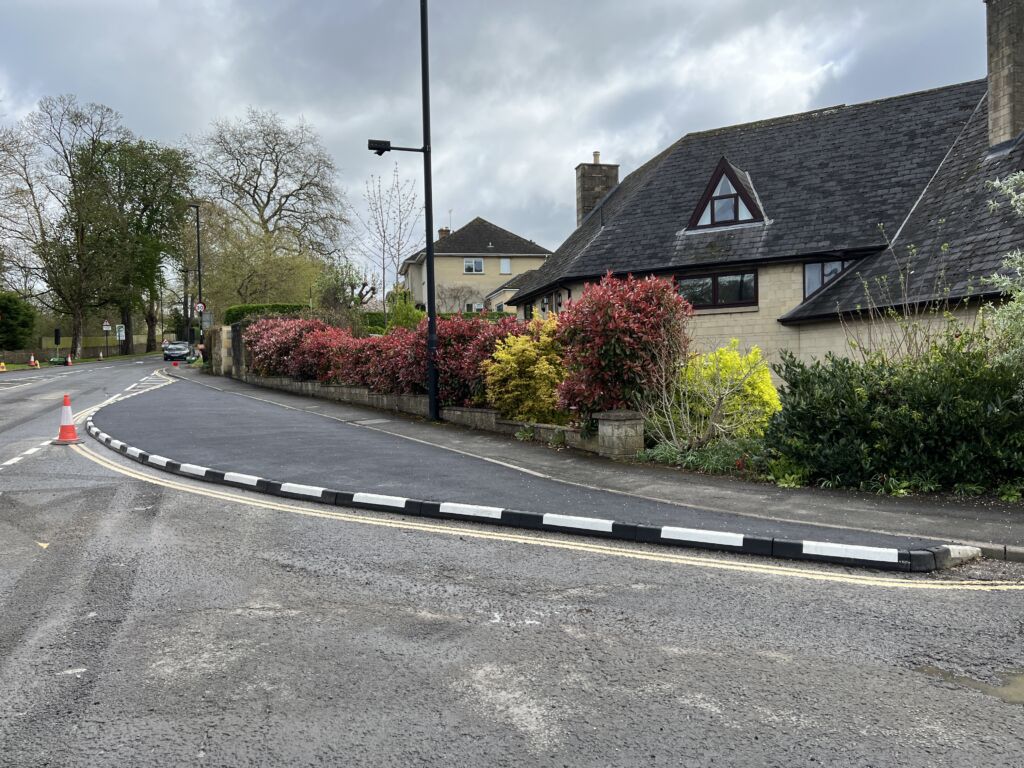
- Build-outs: Roadside extensions that narrow the lane at specific points, naturally slowing down vehicles.
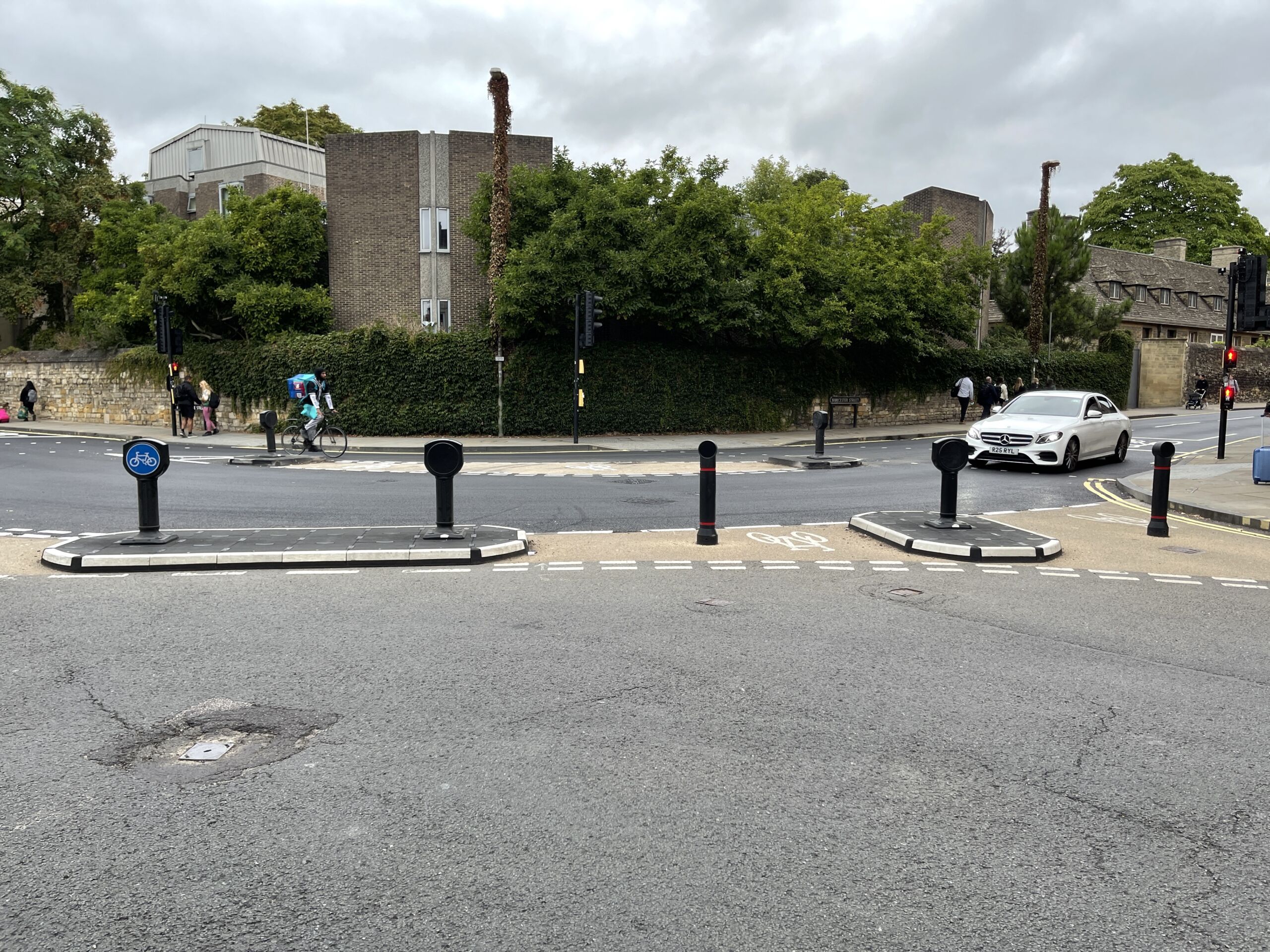
- Mini-roundabouts: Circular junctions that create continuous vehicle movement at reduced speeds.
By subtly shifting the driver’s route, horizontal deflection techniques encourage alert driving and reduce the likelihood of speeding. They also create opportunities for greening and public realm enhancements.
These methods are endorsed in the Global Street Design Guide’s section on traffic calming and are frequently used in conjunction with vertical interventions to maximise impact.
If you’re working with Rediweld, these can be combined with vertical solutions for site-sensitive installations that enhance both function and aesthetics.
Surface Treatments and Visual Narrowing
In addition to physical changes, surface treatments and visual narrowing strategies influence driver behaviour through perception. These techniques create the visual impression of a narrower or shared-use environment, prompting drivers to instinctively slow down, even without speed bumps or chicanes.
Examples include:
- Coloured surfacing: Highlighting cycle lanes, crossings, or school zones with distinctive colours.
- Road markings: Chevron patterns or painted lane narrowing to alter perceived space.
- Visual gateways: Features such as arches or textured pavement that signal entry to a lower-speed zone.
- Raised intersections: Flat-topped crossings at the same height as footways, encouraging more careful driving.
According to Active Travel England, such measures are particularly useful in trial schemes or areas where physical interventions are not feasible due to budget or site constraints.
When used correctly, they can reinforce the effects of physical calming and provide a softer introduction to speed control for drivers unfamiliar with an area.
Combination Measures and Hybrid Designs
Often, the most effective traffic calming designs integrate multiple methods. Known as combination measures or hybrid solutions, these installations blend vertical, horizontal, and visual techniques into a single intervention.
One excellent example is the raised pinch-point crossing, which combines:
- A raised table for speed control,
- Build-outs for horizontal deflection,
- And clear markings for visibility and pedestrian priority.
This combination delivers high-impact results in high-footfall areas, making sure vehicles slow down while also supporting active travel goals.
Rediweld offers purpose-built hybrid solutions, such as the Traficop® Combination Tables, which integrate elevation and narrowing in one modular unit. These are highly customisable and ideal for councils seeking reliable, flexible, and sustainable traffic calming products.
Such multi-feature products simplify installation, reduce long-term maintenance, and deliver superior road safety performance.
Choosing the Right Measure: Factors to Consider
No single traffic calming measure fits all situations. Choosing the right solution depends on several key factors that you need to assess:
- Road type and usage: Are you dealing with a residential road, a distributor road, or a commercial street? The impact on heavy goods vehicles or public transport must be assessed.
- User needs: Consider pedestrian volumes, school proximity, cycling routes, and access requirements for emergency services.
- Budget and funding source: Modular solutions can help stretch budgets by supporting phased roll-outs or trials before full investment.
- Maintenance needs: Materials, weather resistance, and drainage compatibility can influence the total cost of ownership.
- Timeframe: For quick interventions or pilot schemes, rubber-based modular designs offer fast deployment with minimal disruption.
Rediweld’s Traffic Calming team offers tailored advice and a consultative approach to help you select the most appropriate system for your specific challenge. Whether you’re developing a new residential estate or retrofitting an older town centre, bespoke planning helps you achieve interventions that work as intended.
We encourage you to get in touch for a site-specific consultation or to view case studies from similar projects.
Delivering Effective, Site-Specific Traffic Calming Measures
Effective traffic calming measures require more than just placing a few speed humps or repainting some road markings. It’s about understanding the context, user behaviour, and long-term objectives, then applying the right tools in the right way.
This guide has explored the meaning of traffic calming measures, outlined the most widely used types, and shown how Rediweld’s traffic calming solutions support safety, mobility, and community wellbeing. From vertical and horizontal features to visual treatments and hybrid designs, there’s no shortage of options to explore.
But selecting the right one, especially in today’s complex planning environment—requires experience, technical insight, and a reliable product partner.
Rediweld Traffic stands ready to support with:
- Proven modular systems,
- Expertise in local authority requirements,
- And a commitment to sustainable streets.