


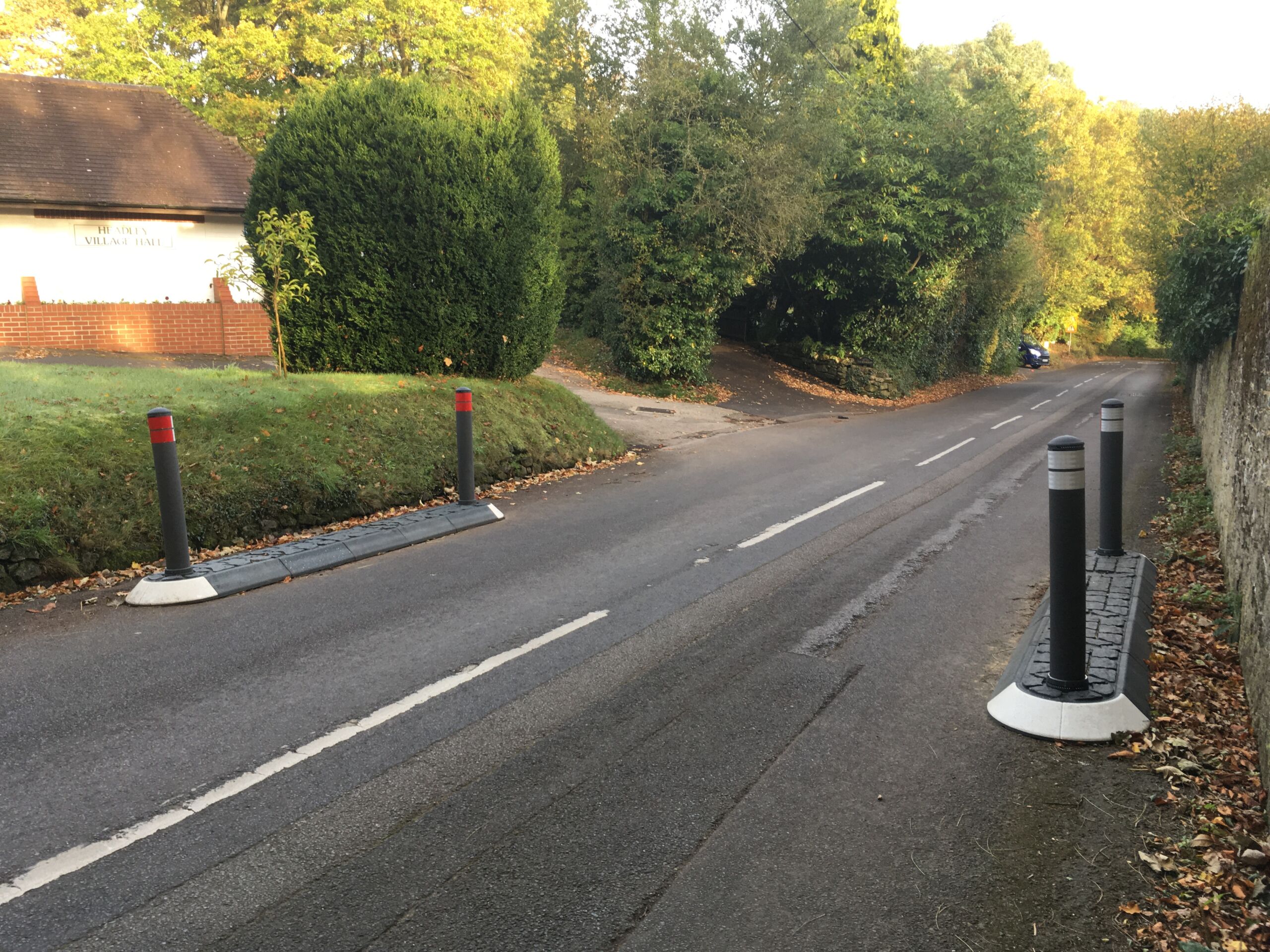
Preserving Charm While Prioritising Safety
Across the UK, rural villages are increasingly facing a modern dilemma: how to preserve their timeless charm and picturesque character while addressing rising concerns about traffic speeds and road safety. The winding lanes, open countryside, and historical architecture that make these villages so appealing are also what make them vulnerable.
Unlike urban environments, rural communities have limited pedestrian infrastructure and often struggle with the presence of larger vehicles, agricultural traffic, and the growing number of drivers seeking alternative routes via satellite navigation.
This means traffic calming in rural villages needs to be effective while remaining sensitive to local character. Communities rightly resist urban-style interventions that threaten the aesthetics of conservation areas and heritage zones.
As a solution, councils, planners, and local communities can implement traffic calming measures that improve safety without spoiling the scenery, and Rediweld Traffic Calming has developed practical, modular, and eco-conscious measures specifically designed for rural environments. Our products offer the visual sensitivity that heritage areas demand while delivering the safety performance that communities need.
The Challenges of Rural Road Safety
Rural roads may seem idyllic, but statistically, they account for a disproportionate number of speed-related accidents and fatalities. The Department for Transport’s own data reveals that over half of all road deaths in Great Britain occur on rural roads.
Unlike their urban counterparts, rural carriageways often feature long sightlines, inviting higher speeds; wide and unmarked roads that can encourage overtaking; and, critically, a lack of pavements or defined pedestrian spaces, placing walkers, cyclists, and horse riders at considerable risk.
Also, many of these villages experience a surge in tourist traffic, especially during summer months or holiday periods, exacerbating congestion and increasing the risk to local residents. The challenge is intensified by community resistance to solutions that appear too “urban” in character, such as large road humps, extensive metal signage, or high-visibility paintwork.
The Sustrans Rural Roads Traffic Calming Info Sheet FF38 highlights this resistance clearly: communities are willing to adopt change, but when it’s contextually appropriate and aesthetically considered.
The Traffic Advisory Leaflet 1/00 similarly emphasises the importance of avoiding “visual clutter” and ensuring that traffic calming in rural villages supports, rather than undermines, the local character. For councils and parish stakeholders, the key is to balance road safety objectives with visual sensitivity and community identity.
Principles of Visually Sensitive Traffic Calming
Designing traffic calming measures for rural settings requires a fundamentally different approach than for urban streetscapes. Here, less is often more. The goal is to influence driver behaviour subtly and effectively, without overwhelming the street scene with industrial-looking infrastructure. This is where context-sensitive design becomes crucial.
Using measures to reflect the surrounding environment, whether that’s stone cottages, timber fencing, or green verges. Materials, colour, scale, and layout should all work together to enhance rather than detract from the rural aesthetic. For example, using earth-toned surfaces instead of stark white or yellow markings can help integrate the measures seamlessly into the road. Calming layouts that preserve sightlines and respect natural contours of the landscape are more likely to gain community support.
As noted in the Traffic Advisory Leaflet 1/00, planners are encouraged to minimise unnecessary signage and lighting, which can feel intrusive in small villages. This doesn’t mean compromising on safety, rather, it involves thoughtful planning that aligns with conservation values while still achieving behavioural change among drivers.
The Sustrans Guide to Rural Calming supports the use of softer engineering approaches such as landscaping, surfacing changes, and small-scale physical features that gently influence speed rather than impose it. This principle is central to the ethos of Rediweld Traffic Calming, where our modular rubber products are designed to be both functional and visually unobtrusive.
Physical Measures That Work in Rural Settings
When it comes to physical installations, certain traffic calming measures are especially well-suited for rural environments. They combine effectiveness with minimal visual and physical disruption, especially when modular designs are employed.
Speed Cushions
One of the most effective and commonly accepted measures is the speed cushion. Unlike full-width speed humps, speed cushions allow emergency vehicles, farm machinery, and buses to straddle the feature without discomfort, while still slowing down passenger cars. This makes them particularly useful on through routes in villages where access needs are varied.
Rediweld’s Traficop® Speed Cushions are an excellent example of rural-appropriate design. Made from recycled rubber, they offer a low-profile, non-invasive installation method with units that can be coloured to match the road surface, helping them blend in more naturally. Their modular format also means minimal excavation, rapid deployment, and easy removal or repositioning if required later.
Sinusoidal Ramp
The Sinusoidal Ramp offers a gentler profile than traditional speed cushions, making it particularly suitable for rural roads where cyclists, horse riders, and farm vehicles are common. Made from recycled materials and surface-mounted without excavation, this modular system can be configured in 3.1 m or 4.1 m lengths to suit different village layouts. It’s especially effective where both traffic calming and comfort for active travel users matter.
Raised Rubber Tables
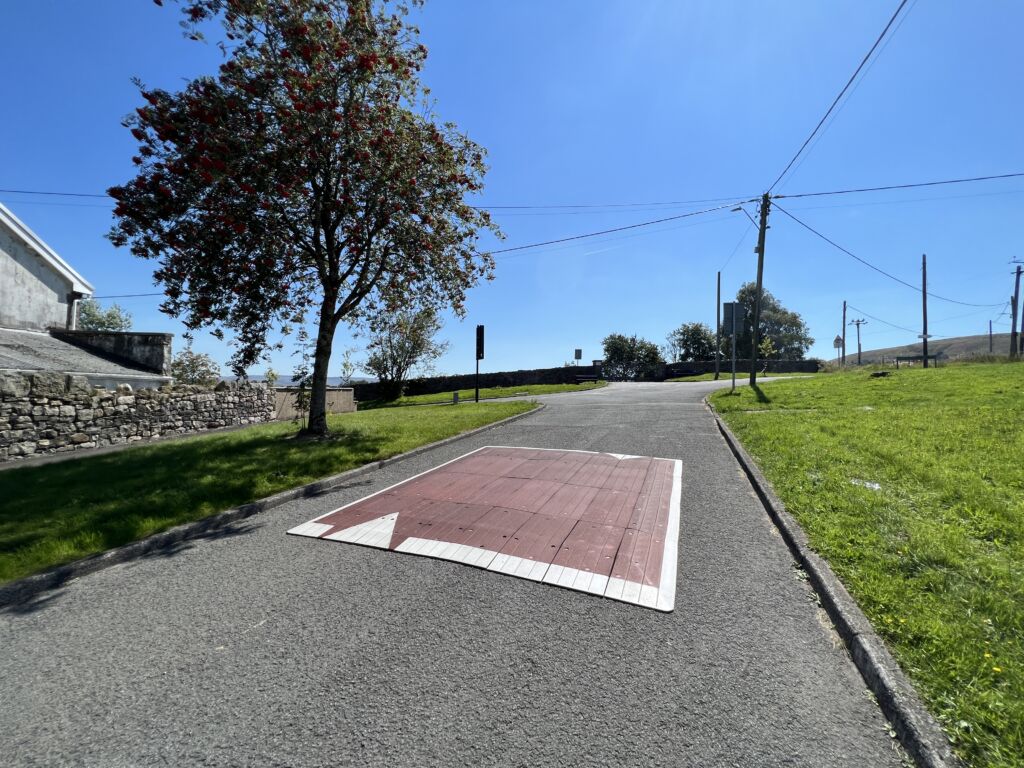
For areas near schools, village greens, or local shops, raised rubber tables offer another solution. These extended platforms slow vehicles over a longer distance and help define community focal points. Unlike traditional concrete installations, which can be disruptive and time-consuming to install, Rediweld’s Raised Rubber Tables are modular, prefabricated, and require no full-depth excavation.
They are ideal for calming traffic while simultaneously enhancing pedestrian priority areas, offering a perfect solution for villages keen to promote walking and cycling without large-scale infrastructure changes.
Combination Tables
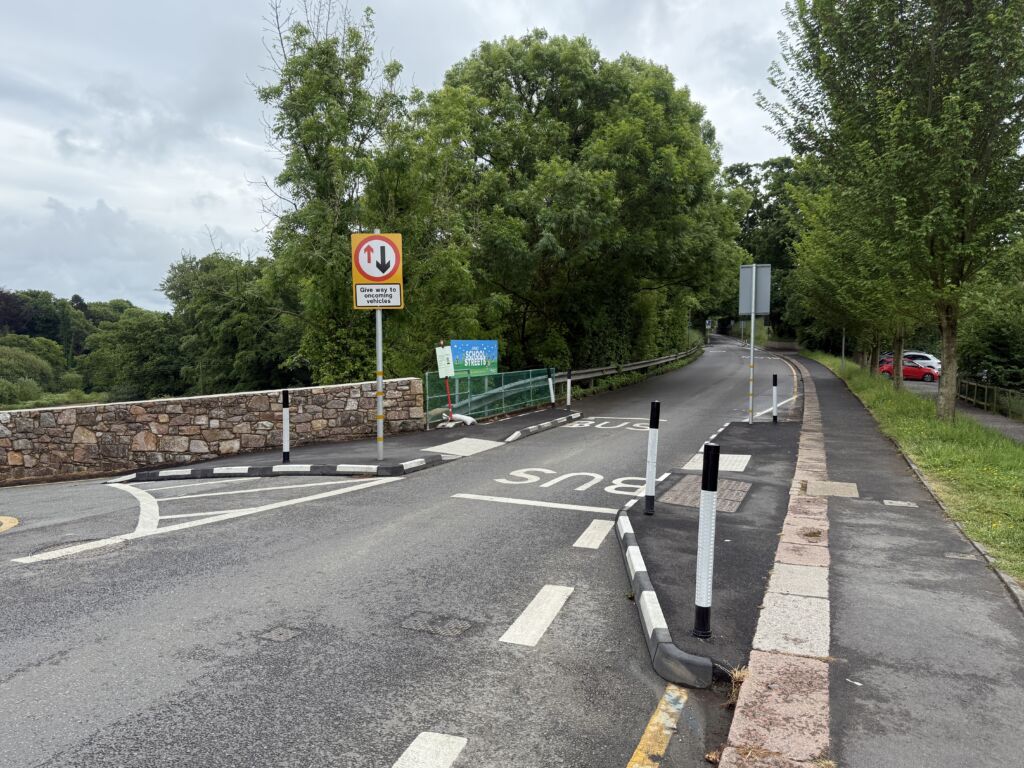
Combination tables, which integrate features of both speed tables and entry thresholds, are particularly effective for gateway treatments, those strategic entry points into a village that signify a change in driving behaviour. These can be coupled with narrowing, surface changes, or signage to create a psychological cue for drivers to reduce speed.
Traficop® Combination Tables from Rediweld are designed to accommodate different road widths and surface treatments, making them a customisable option for villages with varied layouts. These features manage speed and reinforce a sense of arrival, encouraging drivers to adopt a slower, more considerate driving style.
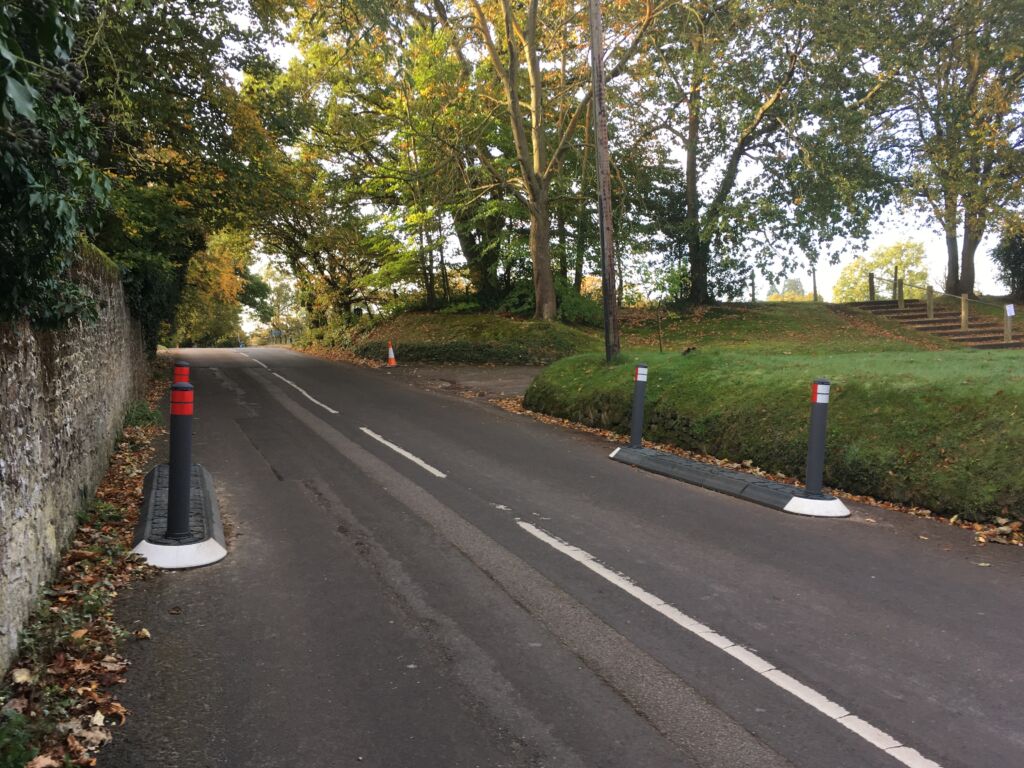
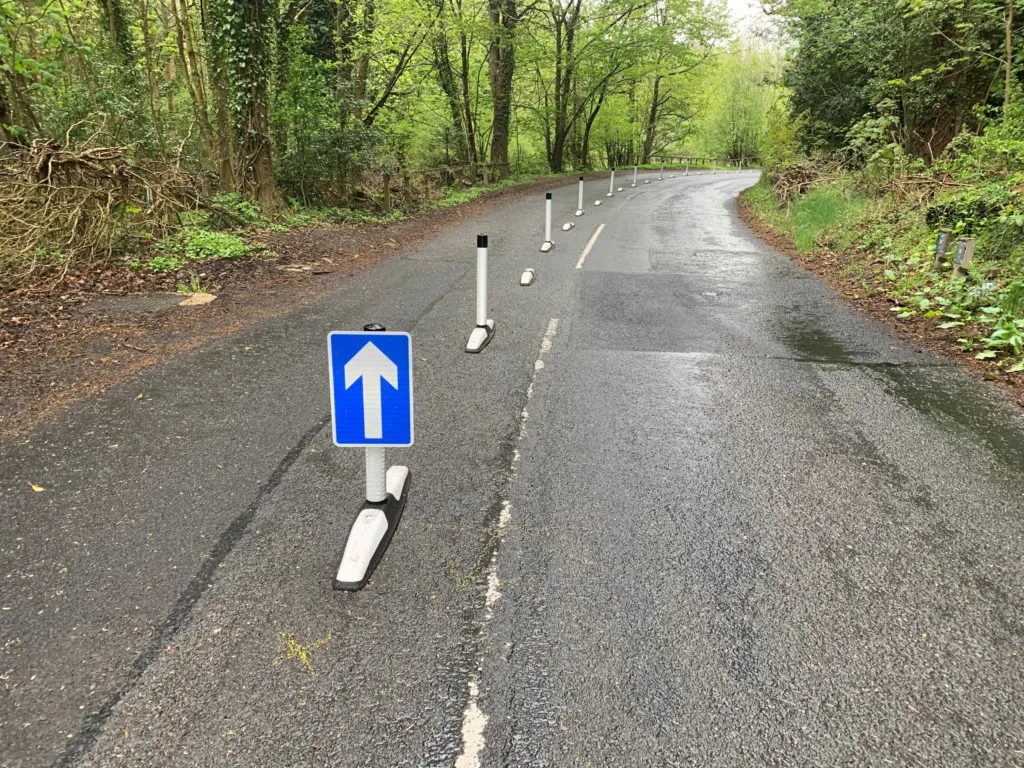
Sustainable and Modular Options for Rural Councils
In addition to aesthetic sensitivity and functional effectiveness, sustainability is an increasingly important factor in the decision-making process. Local authorities are under growing pressure to meet environmental targets, reduce emissions, and implement climate-conscious infrastructure. For rural councils, this can be a challenge, especially when traditional concrete traffic calming methods come with high carbon footprints and permanent impact.
Here’s where Rediweld’s approach truly excels. As all of our traffic calming solutions are manufactured using recycled rubber, we’re proud to offer an eco-friendly alternative that aligns perfectly with rural sustainability values. The modular designs also provide flexibility, making it easy to adjust, move, and trial solutions before making permanent commitments.
This is particularly valuable in rural contexts, where public consultation plays a significant role. Rather than investing heavily in permanent calming infrastructure that may face opposition, councils can deploy rubber-based tables or cushions on a temporary basis to evaluate performance and gather feedback. If changes are required, the systems can be quickly reconfigured or relocated without incurring excessive costs.
The installation time is significantly reduced as well with many Rediweld products able to deploy in hours, not days, which means less disruption for local residents and faster implementation for local authorities.
Case Examples of Traffic Calming in Rural Areas
The Sustrans FF38 report offers several examples of successful rural calming, including trials where modest changes to road appearance produced dramatic results in driver behaviour. Even something as simple as a different road surface, paired with subtle entry signage and a speed cushion, can create a strong sense of village arrival.
Rediweld’s installations have been used in several pilot schemes and community-led interventions, offering scalable, repeatable success stories. For example, using a combination table at the edge of a village, paired with heritage-style signage and minimal lighting, can calm traffic while complementing the local aesthetic.
Even temporary trials using modular raised rubber tables have enabled councils to collect real-world data, demonstrate impact to residents, and build support for more permanent interventions.
Safer Villages That Keep Their Identity
Rural villages face a growing challenge: how to protect residents from increasing traffic while preserving the character that makes these communities special. As vehicles become faster and larger, the pressure to act is mounting, but heavy-handed solutions risk destroying the very heritage these measures aim to protect.
The answer to traffic calming in rural villages lies in combining effectiveness with subtlety, and Rediweld’s rubber-based traffic calming measures offer the best of both worlds: modular, recyclable, customisable, and quick to install. This flexibility means you can build community consensus gradually, trial schemes effectively, and deliver sustainable outcomes that respect both safety and heritage.
Whether you’re a parish council exploring options, a local authority planning improvements, or a consultant seeking village-sensitive solutions, Rediweld can support your vision. Visit our traffic calming product page or get in touch for tailored support. Together, we can create safer roads that honor the timeless beauty of Britain’s rural communities.